Solutions · OEM / ODM
OEM and ODM development — build the product, not just the logo
For brands that need the construction itself to change: a new yarn, a different cushioning map, your own silhouette. We develop the product, prove it on a sample, then produce it at volume.
OEM or ODM — which one do you need?
They are often used interchangeably. They are not the same, and the difference decides who owns the design work.
OEM — you specify
You bring the design, the yarn, the construction and the size grade. We manufacture to your specification, flag anything that cannot be produced as drawn, and propose the nearest achievable alternative.
Best for: brands with an in-house design teamODM — we develop
You bring the market problem: a price point, a wearing condition, a gap in your range. We propose the construction, develop the samples and iterate until the product solves it.
Best for: brands without a technical design resourceHybrid — most common
You start from an existing construction and we change two or three things: a yarn, a cushioning zone, a cuff height. Fastest route to a genuinely differentiated product.
Best for: most brands, most of the timeDevelopment runs through the same eight steps
The difference is at steps one to three, where the specification is created rather than chosen.
Choose your product
Pick a ready style or send a reference sock. We confirm construction, gauge and yarn before anything else.
Send your requirements
Artwork, logo files, target quantity, target price, delivery market and timeline.
Sample development
A digital mock-up first, then a physical pre-production sample in 7–10 days.
Logo & packaging
Knit, printed or embroidered logo plus labels, hangtags, barcodes and retail packaging.
Sample approval
You sign off the sample. Free revisions until you do; the sample fee is refunded on bulk.
Bulk production
18–28 days with inline inspection and a photo/video progress report every week.
Quality inspection
AQL 2.5 final inspection with a photo report. SGS, Intertek or BV welcome.
Global shipping
FOB, CIF or DDP with full export documentation prepared by our team.
Where to go next
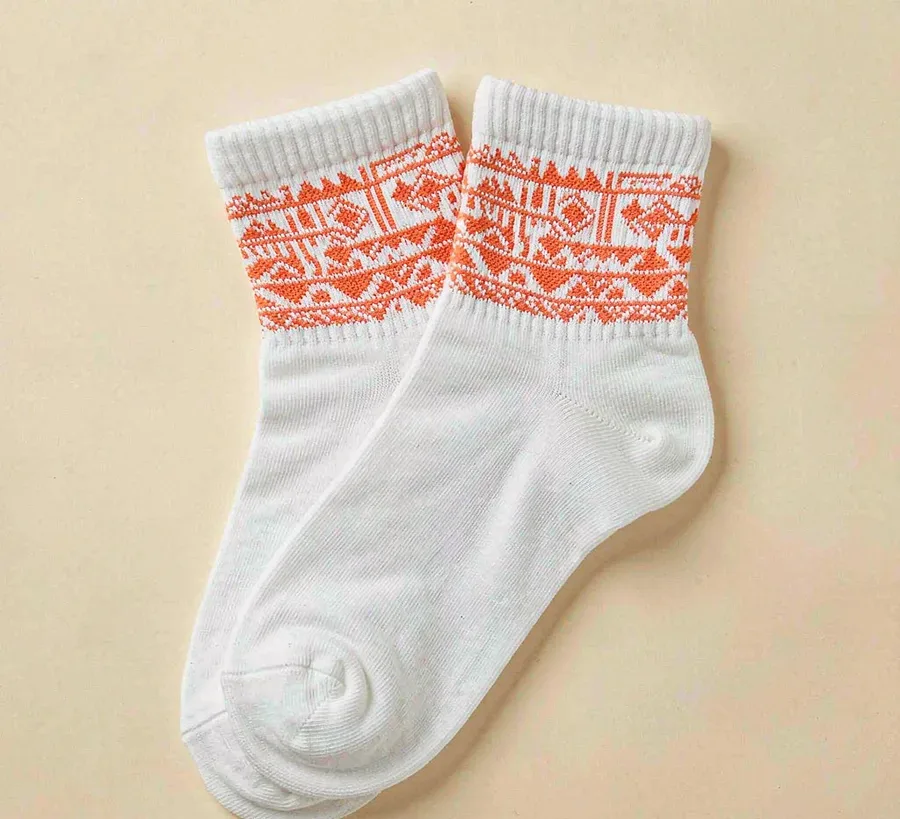
Custom socks
New yarns, structures, cushioning maps and silhouettes, developed from artwork or a reference.
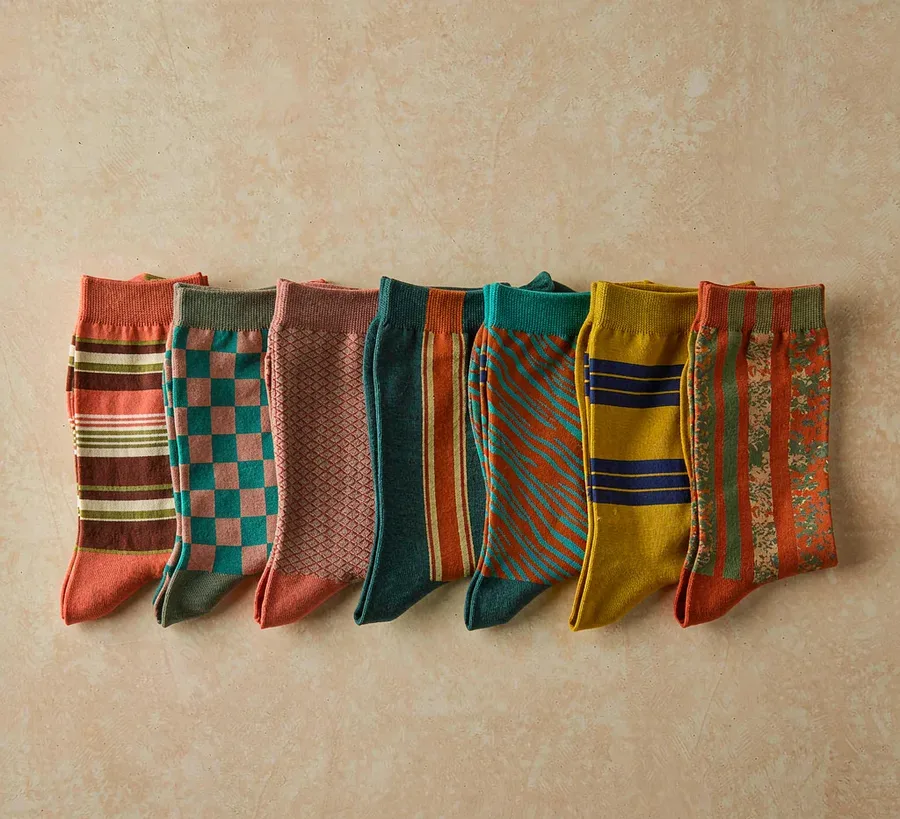
Custom underwear
Pattern development, fabric selection and construction changes for underwear ranges.
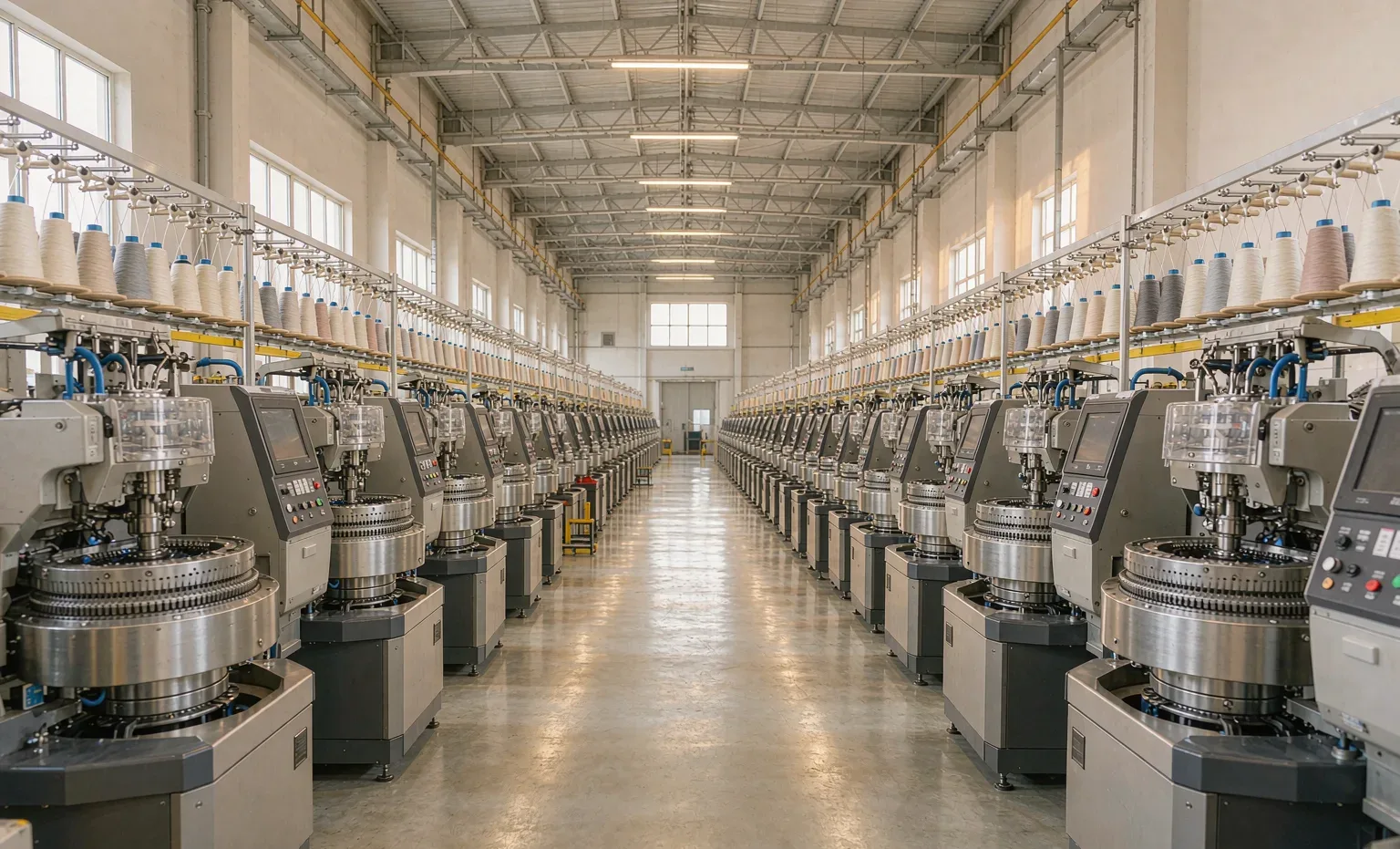
Manufacturing
How the partner-mill network is qualified and how production is controlled.
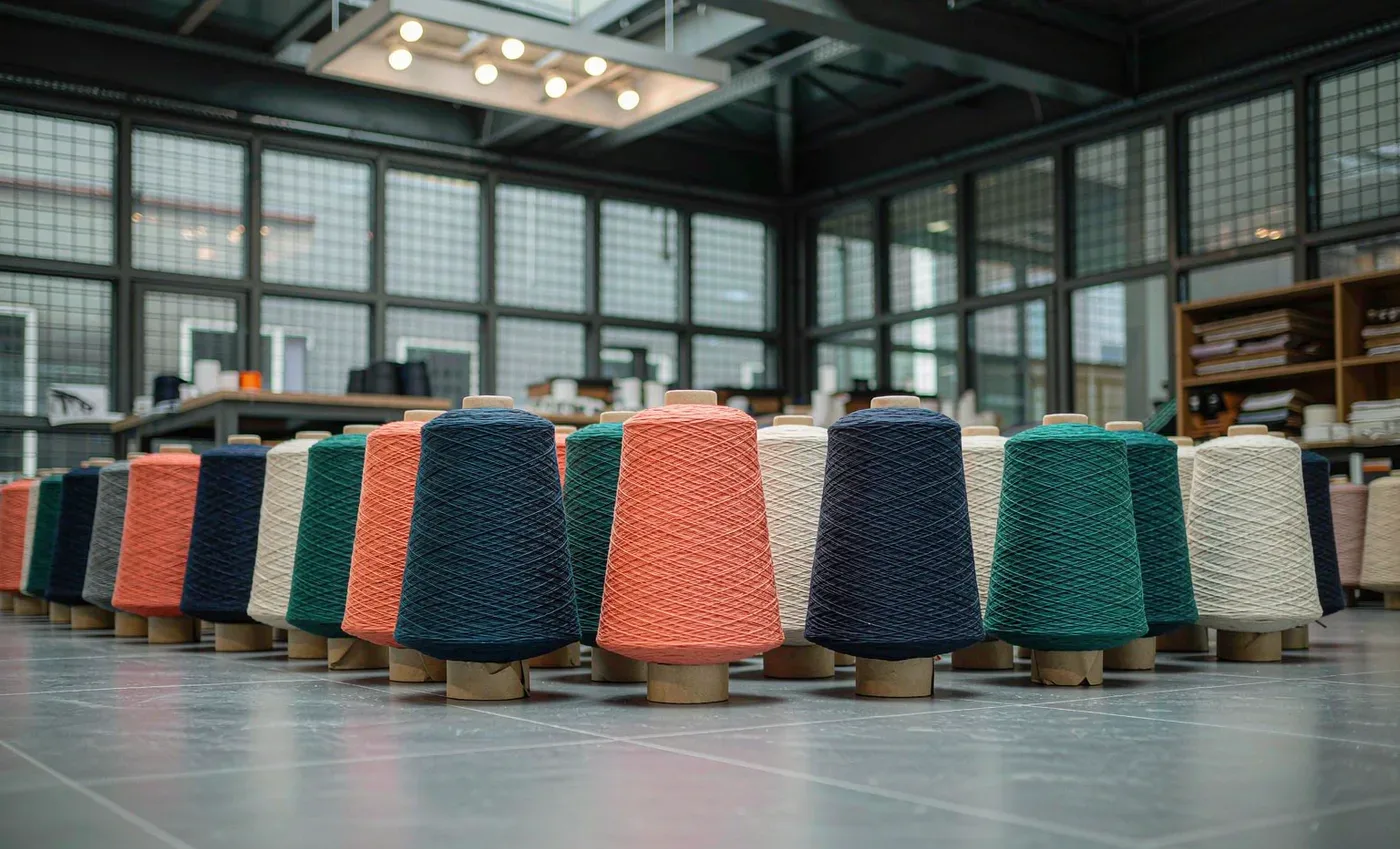
Product development
The pattern room, prototyping, fit validation and technical documentation.
Quality control
The QC chain a development project runs through before it becomes a bulk order.
Case studies
Two development projects and a retail launch, with the numbers.
What a development project actually needs
Development is a technical conversation. The more precisely you can describe the problem, the faster it converges — and a physical reference product, even a competitor’s, is the most efficient brief there is.
A real pattern room, not a spreadsheet
Knit-ready patterns, gauge selection, stitch structures and cushioning maps are developed by people who build them for a living.
Everything documented
Construction sheet, yarn specification, size grading, colour standards and tolerances — written down, so the product survives a reorder a year later.
Development leads held to a date
Prototype rounds are scheduled, not open-ended. You get a development timeline with the quote.
Proven at sample, then scaled
Nothing goes to volume production until a physical sample has been approved — the same gate as a private label order.
Frequently asked questions
What is the difference between OEM and ODM?
In OEM, you specify the product in detail and we manufacture to your specification. In ODM, you describe the market problem and we develop the product that solves it, including the construction and the pattern. Most projects are hybrids: an existing construction with two or three deliberate changes.
What is the MOQ for a development project?
From 1,000 pairs for a developed sock construction and 1,500 pieces for underwear, because a development uses dedicated pattern and sampling resource. If the resulting product works, the reorder steps straight into the standard volume tiers.
How long does development take?
Allow four to six weeks from brief to an approved sample, plus bulk production. Two prototype rounds are typical; complex technical constructions sometimes need three. You get a development timeline with the quotation.
Can you work from a competitor’s sample?
Yes, and it is often the fastest brief you can give us. We will measure the construction, identify the yarn and explain what we can match and what we cannot, along with what the difference means for the product.
Do you own the factory that produces our order?
No — and we are deliberately clear about it. SOXMILL is the brand and the sourcing entity of Beijing Haifu Supply Chain Co., Ltd. Production runs through a network of partner mills in China that we audit and qualify before a single order is placed. We hold the specification, the QC chain, the documentation and the commercial responsibility. That is the part most buyers actually care about: somebody accountable when something goes wrong.
How do you control quality?
One accountable QC chain from yarn to carton: yarn lot inspection on arrival, inline checks at knitting, linking, boarding and pairing, then AQL 2.5 final inspection with a photo report on every shipment. Our lab tests colourfastness (ISO 105), dimensional stability (±3% after five washes), pilling (ISO 12945-2) and mmHg pressure for compression styles.
Describe the product you need to exist.
A market problem, a price point or a competitor’s sample is enough to start. We will come back with a construction proposal.